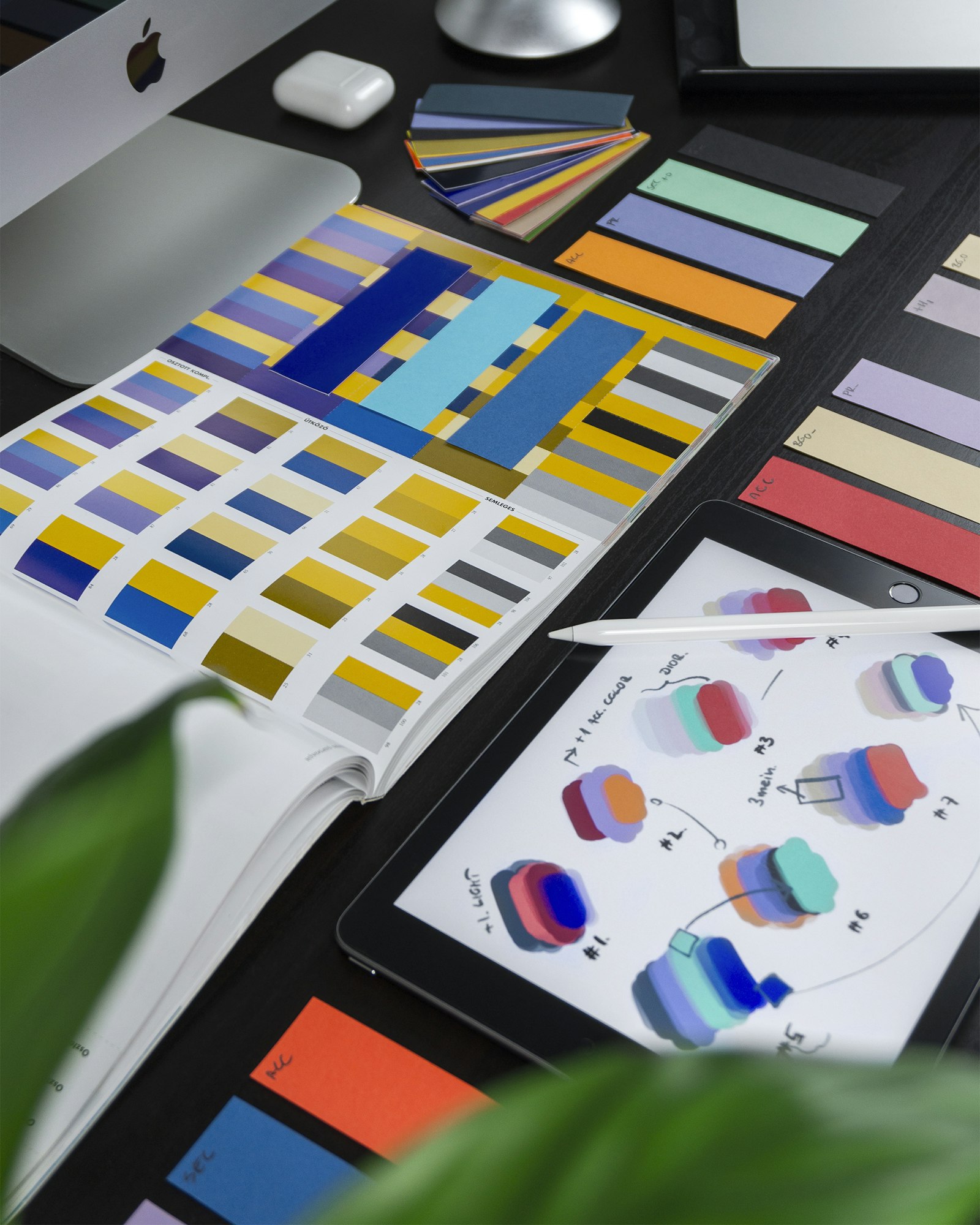
Paper choice changes how a printed piece feels before anyone reads a word of it. Two decisions carry most of that weight: the weight of the sheet and its surface.
What GSM actually tells you
GSM is grams per square metre — mass, not thickness. A bulky uncoated sheet at 120 GSM can feel thicker than a dense coated sheet at 150 GSM. Use GSM as a shorthand, but ask for a sample when the tactile impression matters.
Rough guide by product
- 80–100 GSM — letterheads, internal documents, book text pages.
- 115–170 GSM — flyers, magazine pages, brochure inners.
- 200–250 GSM — brochure covers, postcards, folders.
- 300–400 GSM — business cards, tags, premium invitations.
- 450–600 GSM — luxury duplexed cards and rigid packaging.
Coated, uncoated or silk
Coated gloss gives the widest colour range and the sharpest photographs, but it reflects light and is hard to write on. Uncoated absorbs ink, so colours sit softer and darker, and it takes a pen — good for forms and anything with a handwritten feel. Silk sits between the two and is the safest default for a brochure that carries both images and long text.
Finishes worth the money
Soft-touch lamination changes the feel of a card more than any other single upgrade. Spot UV adds contrast without adding a colour. Foil reads as expensive at a distance. All three cost more per unit but almost nothing per impression on a long run.
Not sure? Ask us for a swatch pack. Holding three options settles the question in a minute.